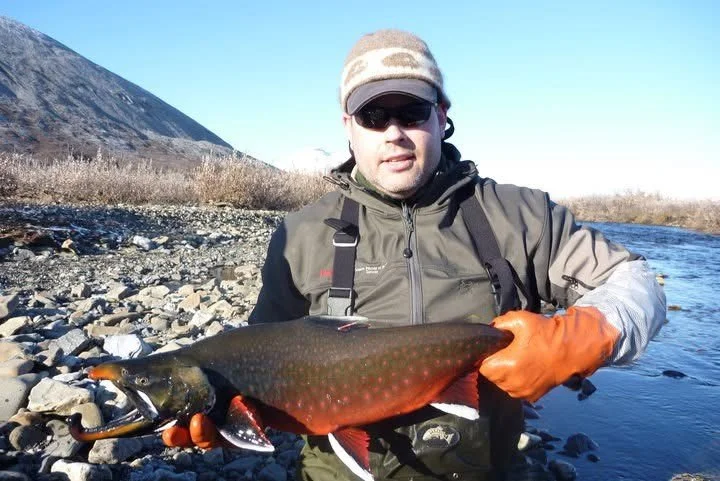
Day 1: Tuesday February 24th, 2026
Breakfast & Registration
7:30am-9:00am
Pool Lobby
Opening Remarks
9:00am-9:45am
Community Hall
Keynote Address
9:45am-10:30am
Community Hall
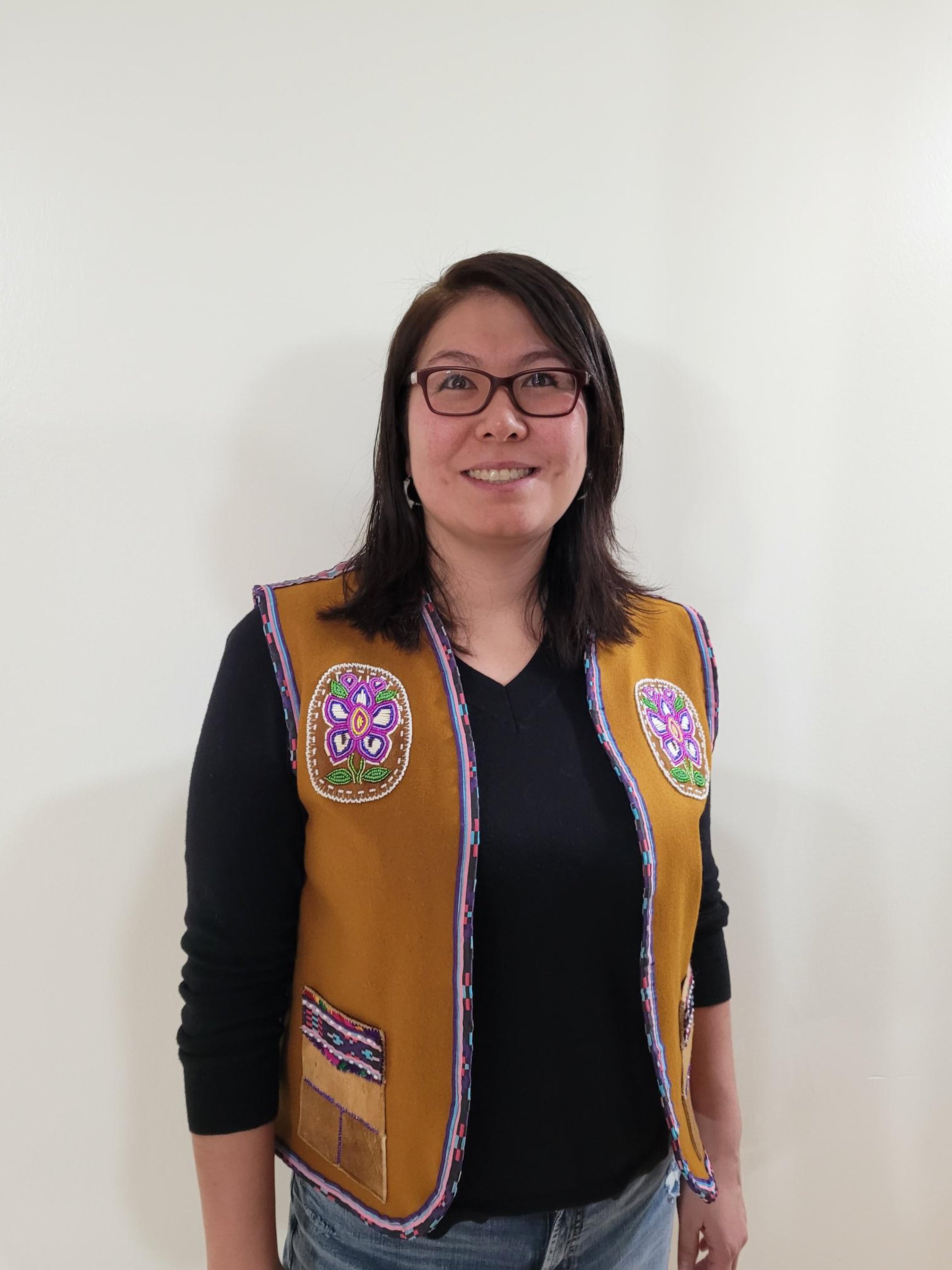
Amy Amos
Keynote SpeakerAmy is from the Gwich’in First Nation and was born in Inuvik, NT. She is currently the Regional Director General for the Department of Fisheries and Oceans (DFO) Arctic Region. As a northerner, she has a deep appreciation for, and knowledge of the Arctic. Since joining DFO in 2021, she has developed an understanding of the Government’s priorities in the North and across Canada. Amy brings significant experience to this role having spent time as the Associate Regional Director General for the DFO Arctic Region, where she has led DFO’s participation in key initiatives including the implementation of the Inuit Nunangat Policy as well as the development of a Northern Recruitment and Retention Strategy for DFO and the Canadian Coast Guard. Before joining DFO, she spent 16 years working for the Gwich’in Renewable Resources Board in Inuvik, NT as both a biologist and Executive Director. In this role, she was very involved in the co-management of Dolly Varden in the Gwich’in Settlement Area. Amy holds a Bachelor’s Degree in Science from Mount Saint Vincent University. She is also the Department of Fisheries and Oceans’ national champion for Indigenous employees.
Break
10:30am-11:00am
Workshop Block 1
11:00am-12:15pm
Workshops
-
Facilitator: Colin Gallagher, DFO
Methods and approaches used to collect data to track populations of char in the Inuvialuit Settlement Region and the Gwich’in Settlement Area will be presented. Additionally, observations on trends in populations from some Alaskan and Nunavut communities will be shared. Workshop participants will discuss causes of changes in populations and how these have affected their fisheries, and where to focus research efforts to track changes in abundance.
-
Facilitator: Matt Gilbert, University of Alaska Fairbanks
We will exchange knowledge about the diverse ways in which environmental change is impacting char habitat temperatures and the potential consequences for across life stages. A central aim is to integrate knowledge among participants and identify priority areas of concern or interest.
-
Facilitators:
Sharon Clouthier, DFO
Oliver Lung, Canadian Food Inspection AgencyThe workshop will highlight research that has advanced our understanding of char health in populations from the western Canadian Arctic. The meeting is designed to be interactive, fostering two-way knowledge exchange between presenters and participants.
Lunch
12:15pm-1:45pm
Pool Lobby
Workshop Block 2
1:45pm-3:00pm
Workshops
-
Facilitators:
Brett Van Poorten, Simon Fraser University
Michael Berry, Simon Fraser University
Maya Townened, Simon Fraser University
Angela Ratzburg, Simon Fraser UniversityPeople have formed important relationships with different populations of char on the land. However, Traditional and Western views of what is a population and how many are there, are very different. Western traditions require long time-series of ‘data’ (e.g., standardized catch rates), but this is impractical and ignores the wealth of lived experiences by harvesters and communities. It is important to open lines of communication between harvesters, knowledge keepers, and decision-makers (resource boards, DFO, others) if we are to get information needed to make decisions. This is especially true as climate change is changing the landscape and the community needs for these fish. This workshop will explore different ways of getting information and how to use information to help make decisions that sustain these fish and fisheries for many generations to come.
-
Facilitator: Andrew Seitz, University of Alaska Fairbanks
Dolly Varden has a large range across North America that spans the U.S./Canada border, yet findings from research and monitoring programs on each side of the border are infrequently shared and discussed. In this workshop, findings from research and monitoring in Alaska will be briefly shared, to facilitate a cross-border discussion about observations and trends of Dolly Varden in the Arctic.
-
Facilitators:
Heidi Swanson, Wilfrid Laurier University
Eric Hitkolok, Community of Kugluktuk
Rosie Smith, University of WaterlooBoth searun Arctic char and Dolly Varden use the Coppermine River near Kugluktuk, Nunavut. We will begin this session with a presentation on our research tracking char near Kugluktuk and what we have learned about the similarities and differences between the two species, followed by group discussions and sharing about the movements and distributions of the two species in other areas.
-
Facilitator: Paden Lennie, Herschel Island–Qikiqtaruk Territorial Park
This workshop will bring together the Char harvesters and other user groups, focusing on aspects that we see while we are using the land during harvesting seasons and the environmental changes driving the fish.
Themes that will be discussed:
1) Physical Appearances (i.e. lesions/ growths/ swelling/ scars/ swelling eyes/etc);
2) Eating Quality (i.e. fat amount/ soft meat/ change in color/ taste/etc);
3) Environmental effects (i.e. spawning areas/ ocean habitat/ water temp/ prey/ distribution/etc); and
4) Techniques we as the harvesters can do to better understand these changes.
Break
3:00pm-3:30pm
Panel A: Exploring the History and Context of Char Management
3:30pm-5:00pm
Community Hall
Moderator
Fisheries Joint Management Committee
Gerald Inglangasuk (Jerry Lennie)
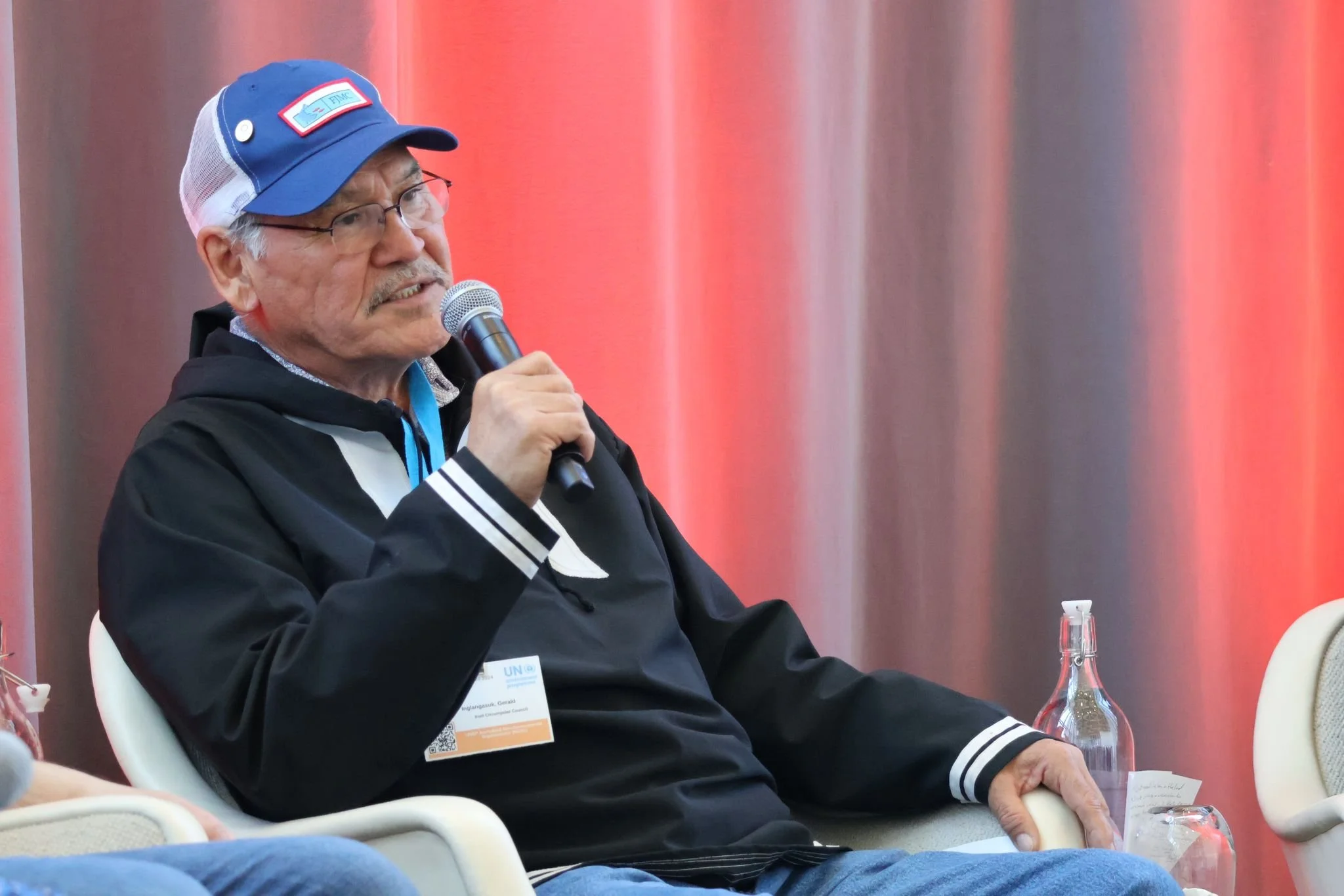
Panelist
Chair of the West Side Working Group
Johnnie Storr
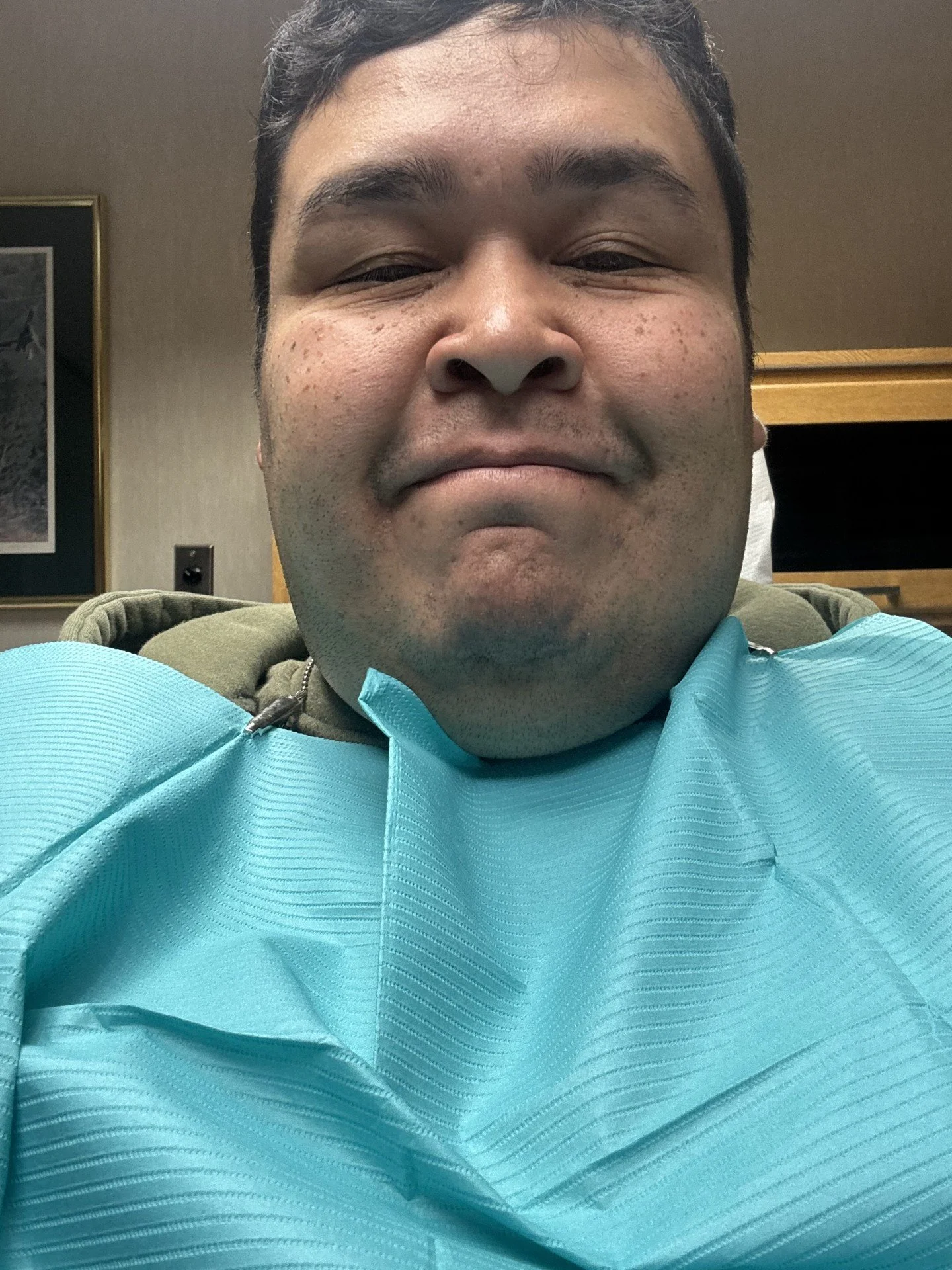
Panelist
Chair of the Rat River Working Group
Robert Charlie-Tetlichi
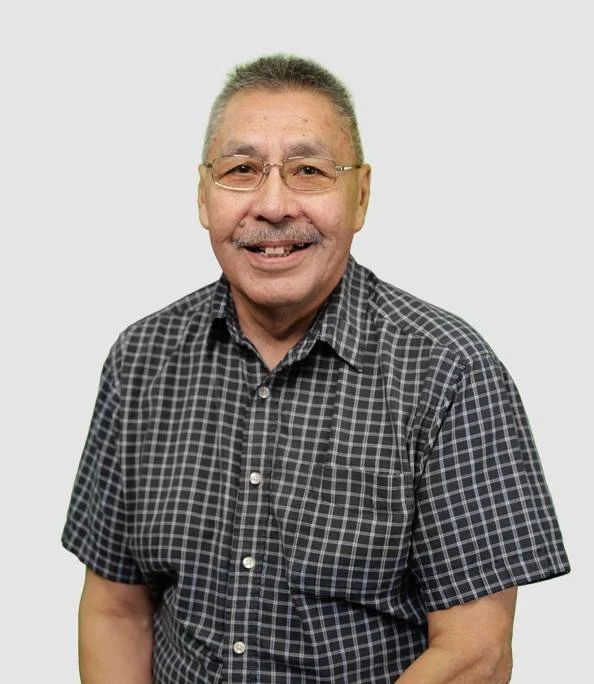
Panelist
Chair of the Paulatuk Char Working Group
Noel Green
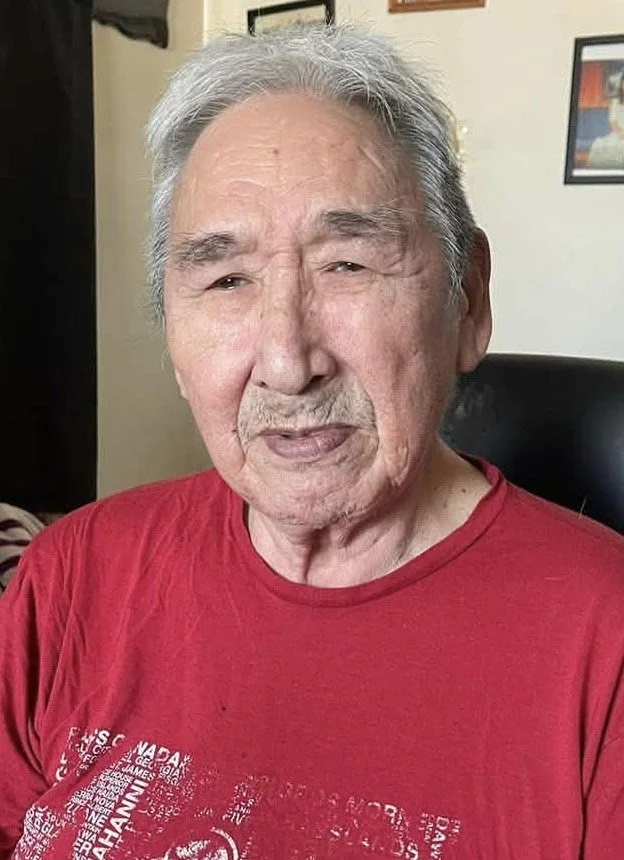
Panelist
Department of Fisheries and Oceans Canada
Kevin Bill